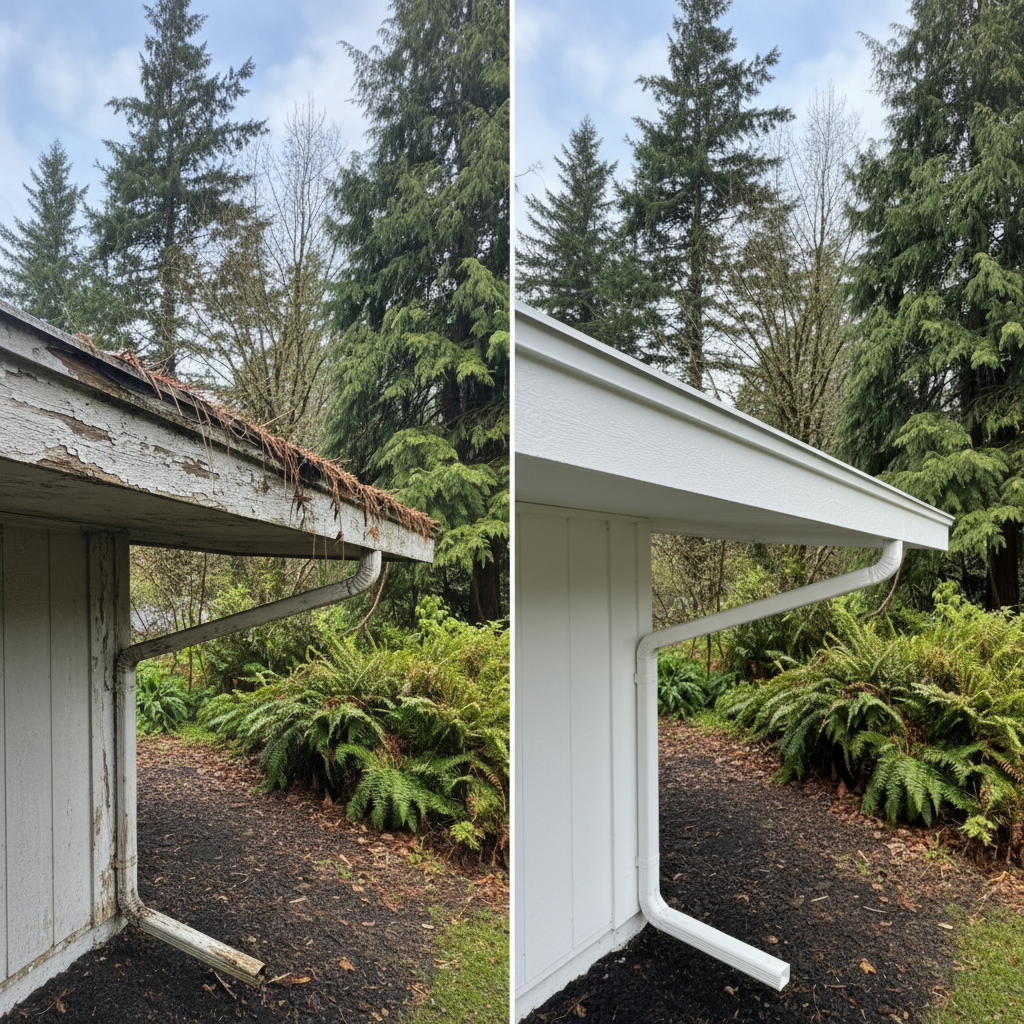
Soffit Sagging in Kent? Repair vs. Replace Sections
So, you've noticed some issues with your soffits. Maybe there's a soft spot, a crack, or an entire section looks like it's seen better days. It's a common problem, especially with our wet Kent weather, and you're probably asking yourself: can I just fix this small bit, or do I need to replace a bigger chunk?
As someone who's been crawling around under eaves for years – and running Top Notch Gutters right here in Kent – I've seen all kinds of soffit damage. Let's talk about your options honestly, so you can make the best call for your home and your wallet.
Option 1: Patching or Spot Repair
This is usually the first thing folks think about when they see a small problem. A little hole, a minor crack, or a small section of rot. The idea is to fix just the damaged area, leaving the rest of the soffit alone.
Cost
Initially, patching is almost always cheaper. You're buying less material – maybe just a small piece of wood, some filler, or a bit of PVC. Labor costs are also lower because it's a quicker job. If you're handy and the damage is truly minor, you might even DIY it with some caulk and paint, saving on labor entirely. But don't underestimate the time it takes to get it looking right.
Durability
Here's where patching gets tricky. If the underlying issue isn't fully addressed – like a persistent leak from your gutters or a ventilation problem – that small repair might not last. You're essentially putting a band-aid on a bigger wound. It can hold for a while, but eventually, the damage might spread or reappear right next to your patch. I've seen patches fail within a year because the root cause wasn't fixed.
Maintenance
A good patch should be low maintenance, just like the rest of your soffit. But you'll want to keep an eye on it. Look for any discoloration, swelling, or signs of the repair failing. If you've got older wood soffits, you're already probably used to painting every few years, so adding a small patched area to that routine isn't a huge deal.
Appearance
This is another big variable. A skilled repair person can make a patch almost invisible, especially if you're painting over it. But if the surrounding soffit is old, discolored, or warped, even a perfect patch will stand out. You might end up with a 'patchwork quilt' look, which isn't ideal for curb appeal. If your home has painted wood soffits, matching the paint can be tough if the existing paint has faded over time.
Option 2: Replacing Entire Sections
This approach involves removing a larger section of the soffit – often from one seam to another, or even an entire run along one side of the house – and installing new material. This is what we often recommend if the damage is extensive, or if you're dealing with older, failing materials.
Cost
Upfront, replacing sections is more expensive. You're buying more material, and the labor involved in removing old sections and installing new ones is greater. However, think about the long game. If you're replacing a larger section with a durable, modern material like vinyl or fiber cement, you might save money on future repairs and maintenance.
Durability
This is where replacing sections shines. When you replace a whole section, you're often getting rid of all the compromised material. This gives you a chance to inspect the framing underneath, address any rot or moisture issues, and ensure proper ventilation. If you're upgrading to a more weather-resistant material, your new soffit will be much more durable against Kent's damp climate, especially in areas like the East Hill where homes are older and have seen a lot of rain.
Maintenance
If you're replacing with modern materials, maintenance drops significantly. Vinyl soffits, for example, are practically maintenance-free beyond an occasional wash. Fiber cement needs painting, but it's incredibly durable. This means less time on a ladder for you, and fewer worries about rot or pests getting in.
Appearance
Replacing sections almost always results in a cleaner, more uniform look. You get fresh, new material that matches perfectly across the replaced area. If you're replacing all the soffits on one side of your house, it can dramatically improve the aesthetic. It makes the whole house look tidier and more cared for.
My Recommendation for Kent Homeowners
Look, if it's a tiny, isolated ding or a surface-level crack, and the rest of your soffit is in great shape, a patch can work. Just make sure you figure out why it happened in the first place. Is it just impact damage? Or is water getting in?
However, for most soffit problems I see around Kent, especially anything involving rot, significant sagging, or widespread discoloration, I'm going to lean towards replacing entire sections. Here's why:
- Our Weather: We get a lot of rain. Rot spreads. A small patch often won't stop it. Replacing gives you a clean slate and a chance to use materials that stand up better to moisture.
- Hidden Damage: What looks like a small problem on the surface often hides bigger issues underneath. When you open up a section, you can properly inspect and fix any framing or ventilation problems.
- Long-Term Value: While more expensive initially, replacing sections with quality materials means a longer-lasting, lower-maintenance solution. You won't be calling someone back in a year or two for another patch. It's a better investment in your home's integrity and curb appeal.
Ultimately, it comes down to what's causing the problem and how extensive it is. Don't just cover it up. Get it properly assessed. If you're unsure, give us a call at Top Notch Gutters. We can take a look and give you an honest opinion on whether a quick fix or a more substantial replacement is the right move for your home.